Eligibility & Rules

Eligibility

There is a diagram to help determine eligibility for the Synopsys Championship.

  • All students who are younger than 20 years old on or before March 1 preceding the Championship and who attend school in Santa Clara County in grades 6–12 are eligible to enter unless they have entered (or plan to enter) another ISEF-affiliated fair in the same school year. Click here to see a list of Santa Clara County cities.
  • Homeschooled students who attend a home school located in Santa Clara County are eligible to enter, even if they participate in online classes from outside the county.
  • Students who live in Santa Clara County and attend an online school full-time are eligible to enter.
  • Students who attend school in Santa Clara County but complete projects at Registered Research Institutions in another locale are eligible to enter.

A student may participate in only one project.

  • Individual projects – $40 application processing fee
  • Team projects—$50 application processing fee for a team of 2-3 students entering a team project. All members of a team must be eligible under the rules. SCVSEFA strongly recommends teams with just 2 students.
  • All projects will be judged for scientific merit using the same criteria regardless of the number of individuals preparing the projects.

General Rules

  1. The Synopsys Championship is an ISEF affiliated fair. We follow the ISEF Rules and Guidelines and expect all students to read and abide by the ISEF ethics statement.
  2. The greatest number of rule infractions in the last 2 years involved students making apps or other devices that claimed to treat or diagnose any illness.  All such projects must be done under the guidance of a qualified doctor and be submitted for pre-approval.
  3. “Scientific fraud and misconduct are not condoned at any level of research or competition. Such practices include plagiarism, forgery, use or presentation of other researcher’s work as one’s own, and fabrication of data. Fraudulent projects will fail to qualify for competition in affiliated fairs and ISEF. [SCVSEFA and the] Society for Science and the Public reserve the right to revoke recognition of a project subsequently found to have been fraudulent.”
    Students who have their projects removed from competition for fraud or misconduct may not enter the Synopsys Championship the following year.
  4. Carefully read the web page about Project Types and Minimum Quality Requirements. Please adhere to these requirements or your project will fail to qualify for competition.
  5. The Adult Sponsor Checklist (Form 1) should be used to ensure that the Application is complete. The Application and Forms may be downloaded, completed and saved as PDFs. Additional forms are required for some projects. The ISEF Rules Wizard can also help you determine which forms to complete.
  6. Projects requiring SRC pre-approval before beginning experimentation must be submitted by the appropriate date. Our only deviation from the ISEF Rules is that, for safety reasons, we request that projects involving chemicals, hazardous activities and devices or regulated substances also seek pre-approval.
  7. ALL students who participated previously in our fair or any ISEF affiliated fair MUST apply for SRC pre-approval and file a continuation form (Form 7). The SRC will determine if the project is a continuation or not. Continuation projects must involve significant new work and only the current year’s research may be in the project presentation.
  8. Projects must comply with all local, state and federal laws as well as SCVSEFA and ISEF Rules. We reserve the right to fail to qualify the project of any student who does not follow these. Review the Project Display Rules to ensure your project complies on fair day.
  9. For the 2027 Synopsys Championship the research work must be done between Jan. 1, 2026 and March 2027 (with no more than 12 months total time).
  10. All MIDDLE SCHOOL projects (grades 6-8) must be done in the school, home, or field.  No projects will be admitted for work done in a research institution.
  11. HIGH SCHOOL projects (grades 9-12) may be done in a Regulated Research Institution (RRI) such as a university, college, or professional research institution, provided all rules regarding their use are followed. An RRI project supervisor (PhD level only) should fill out and sign the appropriate forms. See Who Can Sponsor.
  12. Science Fair policy for students who should have been judged as RRI, but registered incorrectly and were judged as non-RRI: 1) downgrade the Category Award one level, 2) downgrade two levels, or 3) disqualify the student from Category Awards and the State Fair. One option will be chosen by SCVSEFA depending on the facts of the case. In addition, other award winners in the same judging team will be upgraded one level as appropriate.
  13. Parent sponsored projects (PSPs) are permitted in certain situations. See Who Can Sponsor.
  14. On judging day, students must be present starting at 1:30 PM for high school students and 2:00 PM for middle school students. Students must be present at individual projects to be judged. For team projects, at least one eligible team member must be present to be judged, however judges may reduce project scores if they are not able to confirm that all members of the team contributed appropriately.
  15. For non-RRI projects, projects are judged by grade by Category Judges, however 11th and 12th grade projects may be judged together to improve the quality of judging.

The Student Researcher(s)

The student researcher is responsible for all aspects of the research project including enlisting the aid of any required supervisory adults (Adult Sponsor, Qualified Scientist, etc.), obtaining necessary approvals (SRC, IRB, etc.), following the Rules & Guidelines of the Synopsys Championship, and performing the experimentation, engineering, data analysis, etc.  High school students should list their sponsoring high school teacher as the Adult Sponsor except in some cases where the project was done at an RRI (see above).

Use of a non-school research site or Regulated Research Institute.

Projects done at Regulated Research Institutions (RRI) will be judged for Category Awards with other RRI projects.  Projects done at school or home will be judged against non-RRI projects.

Notes about Judging

Students choose a Category and Field of Study for their project. An accurate choice of the Field of Study increases the likelihood that the project will be assigned to judges who understand and appreciate the project. The SRC may recommend or require a change of category after reviewing your project. A science project involves a study, hypothesis and experiment.  An engineering project involves an application, design or device and an engineering goal.

  • The codes used to assign project numbers may have changed. For more information on Categories, Fields of Study and project numbers, go to the Project Categories page.
  • For Category Awards, projects will be judged by category in groups of about 8 to 12 projects by at least two judges. Projects are judged with projects from similar fields of study.
  • Projects done at home, school or in the field (non RRI) continue to be judged by grade and category. Math projects may be grouped together and not judged by grade. Projects (grades 9 to 12 only) done at Regulated Research Institutions (RRI) are judged by category only. (Category judging in the California Science & Engineering Fair and International Science and Engineering Fair is also not done by grade).  Awards will be given in four categories. The overall % category awards given remains the same (about 40%) total.

In person interviews with judges may last up to 8-10 minutes.

Students should be prepared to give a one to two minute verbal description of their project (no slide presentations). Students need to explain their complete projects in terms that the judges can understand. Then judges will ask the students questions about their projects.

Remember to list the website in your references if the idea for your project came from a website.

Judges may disqualify projects from awards if coaching or prompting by other adults is observed by judges during the interview.
RRI Project:  Grades 9 to 12 only
The student research or engineering project is conducted under the guidance of…

  • Regulated/Registered Research Institution (RRI). (Government regulations for institution’s use of animals in accordance with rules of IACUC or Good Laboratory Practice,(GLP), etc.) —
  • Professional research staff at a company or government lab. —
  • Professional research scientist or engineer providing advice and guidance. —
  • Mentors, other than teachers, who provide substantial guidance, data or sophisticated equipment not available in schools. —

Judges will use Form 2C to determine student’s contribution to the research.

Note: Middle school projects may NOT be conducted in the facilities of a Regulated Research Institution.

Important things to know:

1) Your mentor or the PI of the lab where you are working should read the ISEF Rules and Guidelines before you begin. Projects may “fail to qualify” if the PI does not understand that ISEF rules are more stringent than those for NIH etc.

2) We accept RRI projects only from students in grades 9-12 with the proviso that they were working legally at the RRI.

3) Certain application forms require dated signatures or institutional documents before experimentation. For a summer project, use the 2025-2026 forms here (pages 31-44):

4) The forms that are required for your specific project may be determined by using the Rules Wizard on the ISEF website.

5) If you are using a proprietary data set (one that is not publicly available) then your project is considered an RRI.

6) You may present only the work you have done yourself for an individual project.

7) All the students on a team project must be eligible for the Championship; check eligibility here. This means that your lab partner(s) must attend school in Santa Clara County. 

8) All high school students will need to have a teacher from their high school sponsor their project. The only exception is for homeschooled students.

List of Forms:

*Most jobs are done in teams*

Parking Assistant (9AM-1PM and/or 1PM-4PM and/or 4PM-6:30PM)
Qualities: Ability to stand for long periods outside and stay warm, good hearing, unflappable

  • Direct parking areas for those eligible.
  • Hand out maps to nearby parking structures and lots
  • Help students/teachers/parents find drop-off area and parking areas
  • Prevent traffic stoppage in the South Hall area of the Convention Center.

Category Judge Check-in Assistant (9AM – 1PM)
Qualities: Unflappable, careful with alpha and numbers

  • Mark list and pull file as judges check in

Judge Table Guides (11AM – 1PM)
Qualities: Good memory, sense of direction

  • Help judges find their tables in large meeting area

Door Monitors (1:45 – 6PM)
Qualities: Stern mien, disciplined, mostly sitting.

  • Prevent student participants from leaving before end of judging
  • Prevent unauthorized others from entering.

Shutdown Assistant (5PM – 7:30PM)
Qualities: Willing to work loading a storage van, patience

  • Help pack & carry fair materials back to vans for shut down of the fair.

Here is a list of available jobs for Day 1, Registration Day, March 9, 2026

*Most jobs are done in teams*

Hall setup and Signs Assistant (8-11:30AM, includes lunch)
Qualities: High energy, works well in teams

  • set out signs to mark tables for Teachers and Judges
  • Set out 900 place cards for student display locations
  • Rearrange chairs to match needs
  • Hang signs for directions

Step 1 Registration Assistant (11:30-6:30PM, includes lunch)
Qualities: Pleasant, good knowledge of alphabet

  • Pass out Name Badges, sitting job

Step 2 Registration Assistant (11:30-6:30PM, includes lunch)
Qualities: Quick with numbers, quick learner, unflappable

  • Job 1: Find correct application among hundreds, using project number code
  • Job 2: Direct students to appropriate line, based on SRC code of project

Step 3 Registration Assistant (11:30-6:30PM, includes lunch)
Qualities: Able to walk all over the exhibit hall, good sense of direction (pertains to Job 2)

  • Job 1: Assign Poster Board location on the exhibit floor (stationary)
  • Job 2: Direct students to appropriate table location on the display floor for the project board

Step 4 Registration Assistant (11:30-6:30PM, includes lunch)
Qualities: cheerful, patient, comfortable handling $$ transactions

  • sell SCVSEFA t-shirts; keep record of sales

Exhibit Hall Guides (11:30-6:30PM, includes lunch)
Qualities: High energy, good sense of direction, able to stand and move most of the afternoon

  • Help students/teachers/parents find place in huge exhibit hall
  • Direct them to exit via Step 4.

Parking Assistant (8AM-1PM, includes lunch and/or 1-4pm and/or 4-6:30PM)
Qualities: Authoritative, patient, good sense of direction, ability to stand for long periods outside, good hearing, unflappable

  • Direct parking areas for those eligible.
  • Hand out maps to nearby parking structures and lots
  • Help students/teachers/parents find drop-off area and parking areas
  • Prevent traffic stoppage in the South Hall area of the Convention Center

Project Setup Scanner (5PM-7:30PM)
Qualities: Stamina to brisk walk the display board hall

  • Brisk walk the entire display floor of South Hall, verifying project locations are correct
  • Verifying No-Show project boards

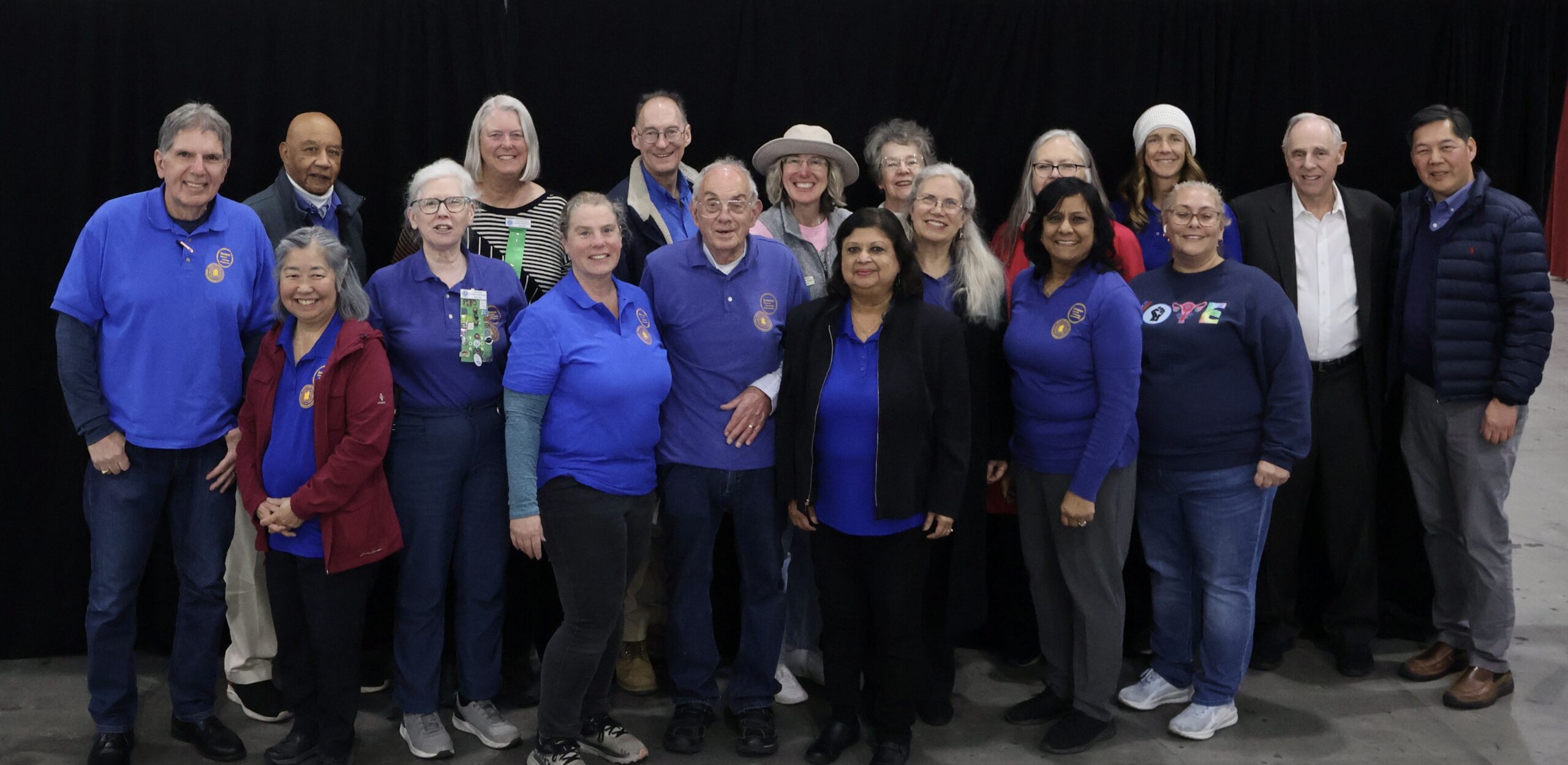
The SCVSEFA Board of Directors consists of a working group of professionals and interested community members who volunteer more than 3500 hours collectively each year to support the science fair program.

2025-2026 Board of Directors

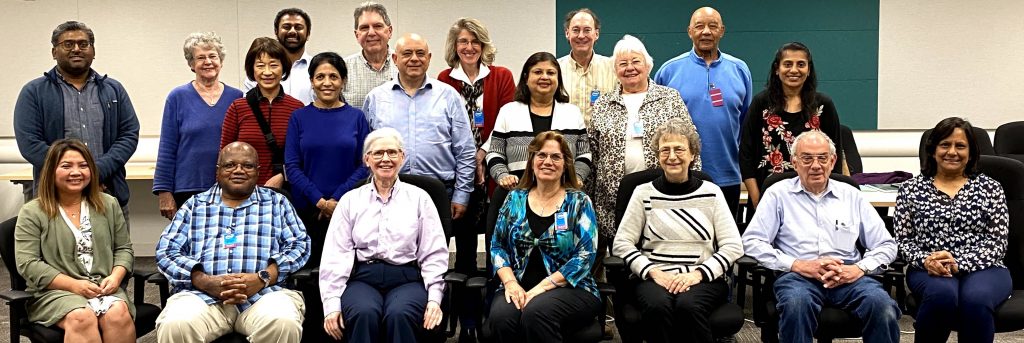
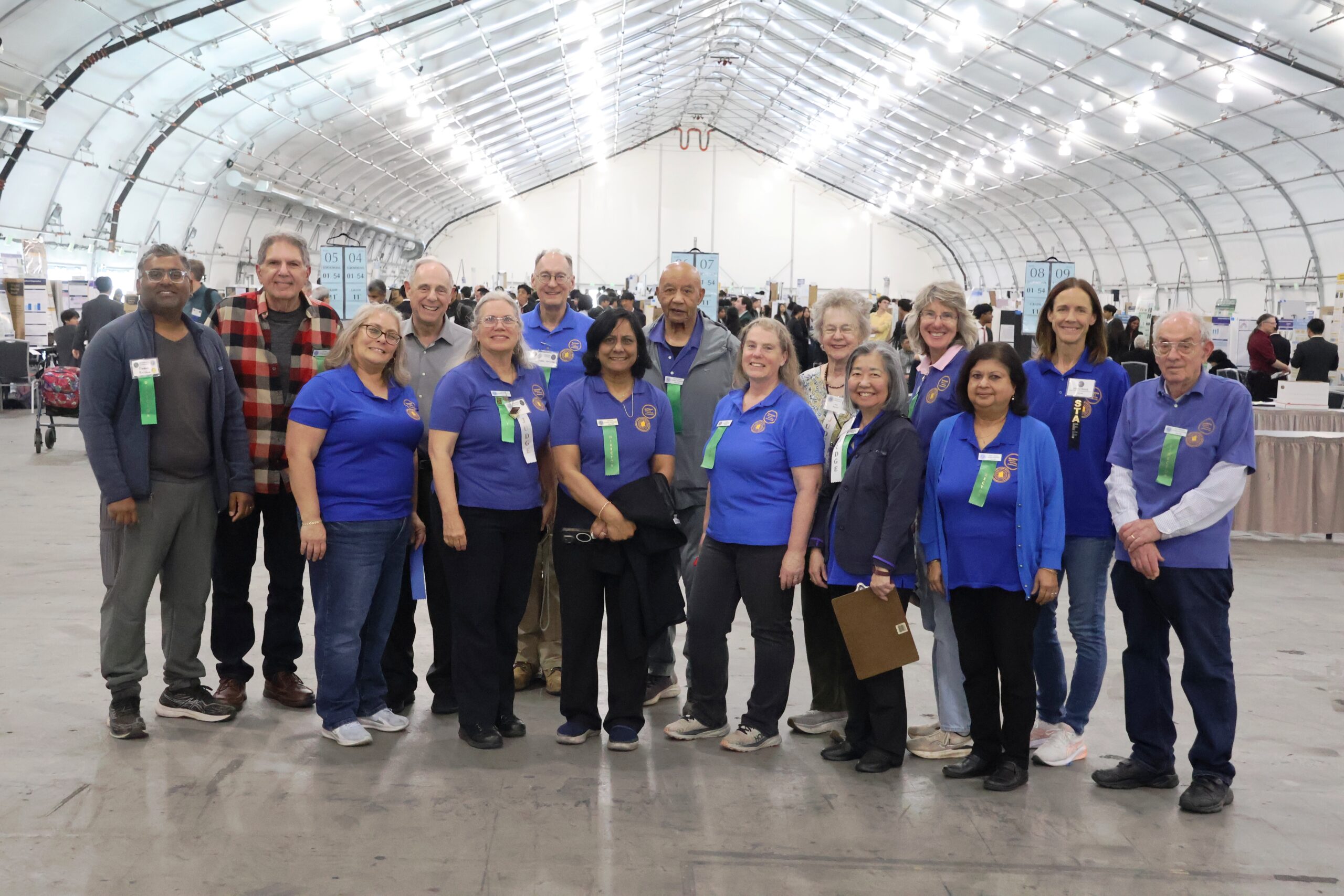
Back Row Left to Right: Praveen Krishna, Antonio Gallo, Paul Streit, Kerry Veenstra, Forrest Williams, Ann Burrell, Sandra Meditch, Jessica Benak (Admin), Lynn Liebschutz
Front Row Left to Right: Yamel Valdez (Admin), Heidi Strahm Black, Veena Jain, Renee Fallon, Laurie Toyama, Aulena Chaudhuri
Absent: Larke Reeber, Meena Kastururangan, Anjaney Kottapalli, Shanthi Pichai, Srinivas Rao,

Veena Jain, President
Praveen Krishna, Secretary
Meena Kasturirangan, Treasurer

Other Board Members:
Heidi Strahm Black
Ann Burrell
Aulena Chaudhuri
Renee Fallon
Antonio Gallo
Anjaney Kottapalli
Lynn Liebschutz
Sandra Meditch
Shanthi Pichai
Srinivas Rao
Larke Reeber
Paul Streit
Laurie Toyama
Kerry Veenstra
Forrest Williams

2024-2025 Board of Directors

Back Row Left to Right: Forrest Williams, Karen Gundy Burlet, Kerry Veenstra, Sandra Meditch, Ann Burrell, Kathy Jarvis (Associate Board Member), Jessica Benak (Admin), Paul Streit, Colin Ong
Front Row Left to Right: Antonio Gallo, Laurie Toyama, Larke Reeber, Renee Fallon, Lynn Liebschutz, Aulena Chaudhuri, Heidi Strahm Black, Veena Jain, Yamel Valdez (Admin)

Sandra Meditch, President
Veena Jain, President Elect
Praveen Krishna, Secretary
Meena Ram Kasturirangan, Treasurer

Other Board Members:
Heidi Strahm Black
Ann Burrell
Aulena Chaudhuri
Renee Fallon
Antonio Gallo
Moenes Iskarous
Anjaney Kottapalli
Preeti Lal
Lynn Liebschutz
Colin Ong
Shanthi Pichai
Srinivas Rao
Larke Reeber
Paul Streit
Laurie Toyama
John Turner
Kerry Veenstra
Forrest Williams
Xi Zhao-Wilson

2023-2024 Board of Directors

Srinivas Rao, President
Praveen Krishna, Secretary
Meena Ram Kasturirangan, Treasurer

Other Board Members:
June Andersen
Heidi Strahm Black
Ann Burrell
Aulena Chaudhuri
Renee Fallon
Antonio Gallo
Moenes Iskarous
Veena Jain
Anjaney Kottapalli
Preeti Lal
Lynn Liebschutz
Sandra Meditch
Colin Ong
Dinakar Panyam
Shanthi Pichai
Larke Reeber
Aparna Sayana
Paul Streit
Laurie Toyama
John Turner
Kerry Veenstra
Forrest Williams
Xi Zhao-Wilson

2022-2023 Board of Directors

Heidi Black, President
Srinivas Rao, President-Elect
Praveen Krishna, Secretary
Anjaney Kottapalli, Treasurer

June Andersen
Heidi Black
Vanessa Burbach
Ann Burrell
Aulena Chaudhuri
Antonio Gallo
Moenes Iskarous
Veena Jain
Praveen Krishna
Preeti Lal
Lynn Liebschutz
Sandra Meditch
Shanthi Pichai
Srinivas Rao
Larke Reeber
Donna Richardson
Aparna Sayana
John Turner
Kerry Veenstra
Forrest Williams
Xi Zhao-Wilson

2021-2022 Board of Directors

Sandra Meditch, President
Heidi Black, President-Elect
Praveen Krishna, Secretary
Anjaney Kottapalli, Treasurer

June Andersen
Heidi Black
Vanessa Burbach
Ann Burrell
Aulena Chaudhuri
Antonio Gallo
Moenes Iskarous
Veena Jain
Praveen Krishna
Lynn Liebschutz
Srinivas Rao
Larke Reeber
Donna Richardson
Aparna Sayana
John Turner
Kerry Veenstra
Forrest Williams
Sandi Yellenberg
Xi Zhao-Wilson

2020-2021 Board of Directors

Sandra Meditch, President
Sudha Raman, President-Elect
Aparna Sayana, Secretary
Anjaney Kottapalli, Treasurer

June Andersen
Heidi Black
Vanessa Burbach
Ann Burrell
Aulena Chaudhuri
Antonio Gallo
Moenes Iskarous
Veena Jain
Lynn Liebschutz
Larke Reeber
Donna Richardson
John Turner
Kerry Veenstra
Forrest Williams
Xi Zhao-Wilson

2019-2020 Board of Directors

2020-Board-crop
Seated, left to right: Vanessa Burbach, John Turner, Larke Reeber, Heidi Black, Sandi Yellenberg, Lynn Liebschutz, Veena Jain. Standing: Praveen Krishna, Ann Burrell, Xi Zhao-Wilson, Anjaney Kottapalli, Sudha Raman, Tony Gallo, Moenes Iskarous, Sandra Meditch, Aulena Chaudhuri, Kerry Veenstra, June Andersen, Forrest Williams, Aparna Sayana. Absent: Karen Gundy-Burlet, Srinivas Rao.

Heidi Black, President
Sandra Meditch, President-Elect
Aparna Sayana, Secretary
Anjaney Kottapalli, Treasurer

June Andersen
Vanessa Burbach
Ann Burrell
Aulena Chaudhuri
Antonio Gallo
Karen Gundy-Burlet
Moenes Iskarous
Veena Jain
Lynn Liebschutz
Sudha Raman
Larke Reeber
John Turner
Kerry Veenstra
Forrest Williams
Sandi Yellenberg
Xi Zhao-Wilson

2018-2019 Board of Directors

Karen Gundy-Burlet, President
Heidi Strahm Black, President-Elect
Katy Korsmeyer, Treasurer
Sandra Meditch, Secretary

June Andersen
Vanessa Burbach
Ann Burrell
Holly Denton
Moenes Iskarous
Veena Jain
Anjaney Kottapalli
Lynn Liebschutz
Sudha Raman
Larke Reeber
Aparna Sayana
John Turner
Kerry Veenstra
Forrest Williams
Sandi Yellenberg
Xi Zhao-Wilson

2017-2018 Board of Directors

Katy Korsmeyer, President
Karen Gundy-Burlet, President-Elect
Larke Reeber, Treasurer
Sandra Meditch, Secretary

June Andersen
Heidi Strahm Black
Vanessa Burbach
Ann Burrell
Pat Castro
Jenny Chui
Holly Denton
Kanchan Dilip
Moenes Iskarous
Veena Jain
Uma Kottali
Lynn Liebschutz
Ajay Navaratna
Sudha Raman
Aparna Sayana
Sruba Seshadri
Lynn Shannon
John Turner
Kerry Veenstra
Forrest Williams
Sandi Yellenberg

2016-2017 Board of Directors

First row L to R: Holly Denton, Larke Reeber, June Anderson, John Turner, Susan Lange.
Second Row L to R: Veena Jain, Moenes Iskarous, Ann Burrell, Forrest Williams, Sandra Meditch, Katy Korsmeyer, Lynn Liebschutz, Bruce Kawanami, Heidi Black.
Not shown: Vanessa Burbach, Pat Castro, Jenny Chui, Kavitha Jayachandran, Uma Kotalli, Sudha Raman, Donna Richardson, Aparna Sayana, Sruba Seshadri, Lydia So, Lynn Shannon, and Sandi Yellenberg, Kerry Veenstra.

Veena Jain, President
Katy Korsmeyer, President-Elect
Larke Reeber, Treasurer
Sandra Meditch, Secretary

June Andersen
Heidi Strahm Black
Vanessa Burbach
Ann Burrell
Pat Castro
Jenny Chui
Holly Denton
Moenes Iskarous
Kavitha Jayachandran
Bruce Kawanami
Uma Kottali
Susan Lange
Lynn Liebshutz
Ajay Navaratna
Sudha Raman
Aparna Sayana
Sruba Seshadri
Lynn Shannon
John Turner
Kerry Veenstra
Forrest Williams
Sandi Yellenberg

2015-2016 Board of Directors

B
Front row L to R: Katy Korsmeyer, Ann Burrell, Veena Jain, June Anderson, Vanessa Burbach.
2nd row L to R: Susan Lange, Holly Denton, Heidi Black, and Sudha Raman.
3rd row seated L to R: Rose Mary Brodbeck, Sandra Meditch, John Turner.
Standing in back L to R: Sandi Yellenberg, Larke Reeber, Ajay Navaratna, Bruce Kawanami, Lynn Liebschutz, Dennis Bua, Kerry Veenstra, Forrest Williams, Moenes Iskarous.
Not shown: Pat Castro, Jenny Chui, Kavitha Jayachandran, Uma Kotalli, Donna Richardson, Aparna Sayana, Sruba Seshadri, Lydia So, and Lynn Shannon.

2014-2015 Board of Directors

Bruce Kawanami, President
John Turner, President-Elect
Larke Reeber, Treasurer
Vanessa Burbach, Secretary

June Andersen
Ann Burrell
Heidi Strahm Black
Pat Castro
Jenny Chui
Moenes Iskarous
Veena Jain
Kavitha Jayachandran
Uma Kottali
Vinish Lall
Susan Lange
Lynn Liebschutz
Sandra Meditch
Ajay Navaratna
Sudha Raman
Aparna Sayana
Sruba Seshadri
Lynn Shannon
Lydia So
Kerry Veenstra
Forrest Williams
Sandi Yellenberg
Teresa Zarrin

2013-2014 Board of Directors

 
Board Members, Associates (a) and Volunteers (v) for the 2014 Synopsys Championship.  Left to right Front Row: Veena Jain. Carole Kalcic (v), Vanessa Burbach, Heidi Black, Ann Burrell, Sudha Raman, Sandi Yellenberg, and Rose Mary Brodbeck (v).  Second Row: Teresa Zarrin, Forrest Williams, Moenes Iskarous, Kerry Veenstra, Uma Kotalli, Pat Castro, Sandra Meditch, Larke Reeber, Sruba Seshadri, Karthik Srinivasan (a),Susan Lange, Vicki Doyle-Jones (v), and Lynn Liebschutz.
Not pictured: Jenny Chui, Bruce Kawanami, Vinish Lall, Steve Nelson, Lynn Shannon, John Turner, Kavitha Jayachandran, Ajay Navaratna, and Karl Laughton (a).


2012-2013 Board of Directors

 
2013board-all
1st Row (left to right): Veena Jain, Vanessa Burbach, Heidi Black, Pat Castro, Sudha Raman.  2nd Row: Forrest Williams, Moenes Iskarous, Bruce Kawanami, Sandi Yellenberg , Susan Lange, Steve Nelson, Larke Reeber, John Turner, Ann Burrell, Lynn Liebschutz.
Not Pictured above: Vinish Lall, Kavitha Jayachandran, Ajay Navaratna , and Sruba Seshadri.

2011-2012 Board of Directors

2012-board-photo
Left to Right:  Sudha Raman, Vanessa Burbach, Julie Karni, Sandi Yellenberg, Veena Jain, Sandra Meditch, Lynn Liebschutz, Heidi Black, Moenes Iskarous, Vinish Lall, Bruce Kawanami, Steven Nelson, Forrest Williams.  
Not Pictured above: Ajay Navaratna,  Pat Castro, Susan Lange, Kerry Veenstra,  Ann Burrell, John Turner, Larke Reeber, Sruba Seshadri, and Kavitha Jayachandran.

2010-2011 Board of Directors

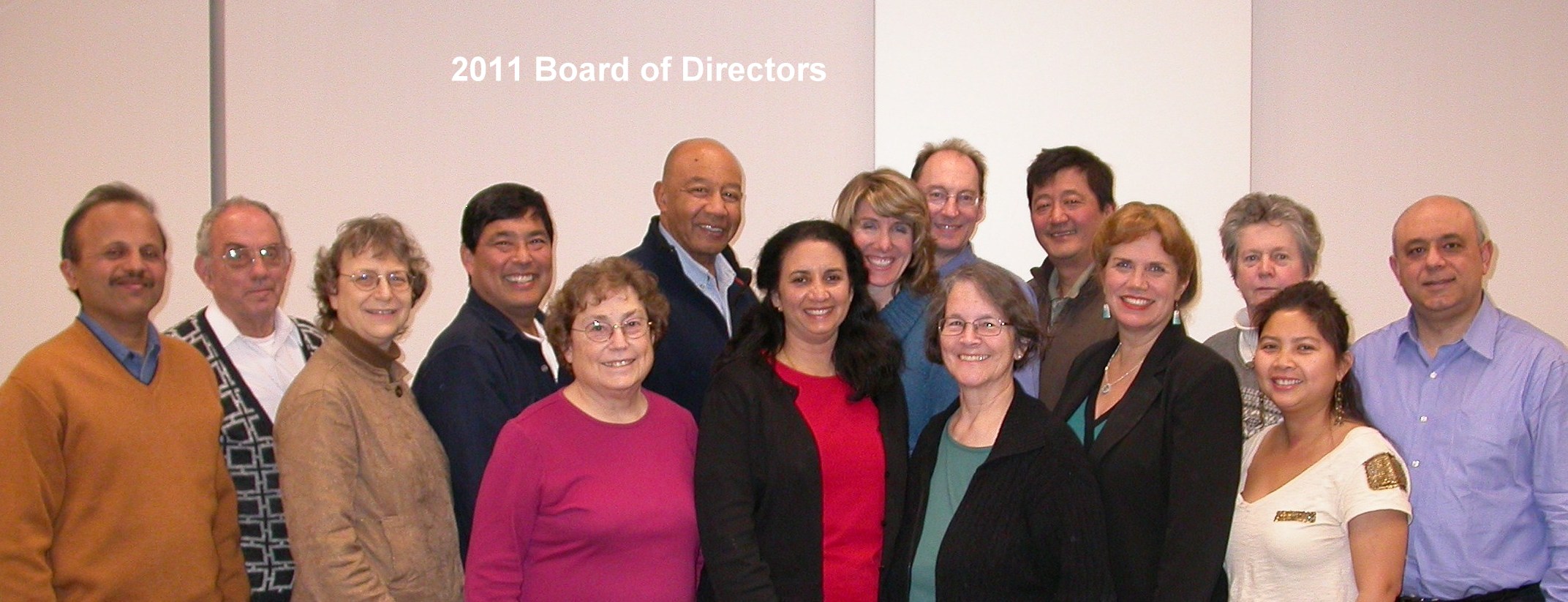
2011 board
1st Row (left to right):  Ajay Navaratna, Sandi Yellenberg, Pat Castro, Prema Rao, Susan Lange, Heidi Black, Vanessa Burbach.    2nd Row: Lynn Liebschutz, Bruce Kawanami, Forrest Williams, Sandra Meditch, Kerry Veenstra, Steven Wang, Ann Burrell, and  Moenes Iskarous.
Not Pictured above: Vinish Lall, Veena Jain, John Turner, Larke Reeber, Lydia So, Kavitha Jayachandran, and Steven Nelson.

2007-2008 Board of Directors

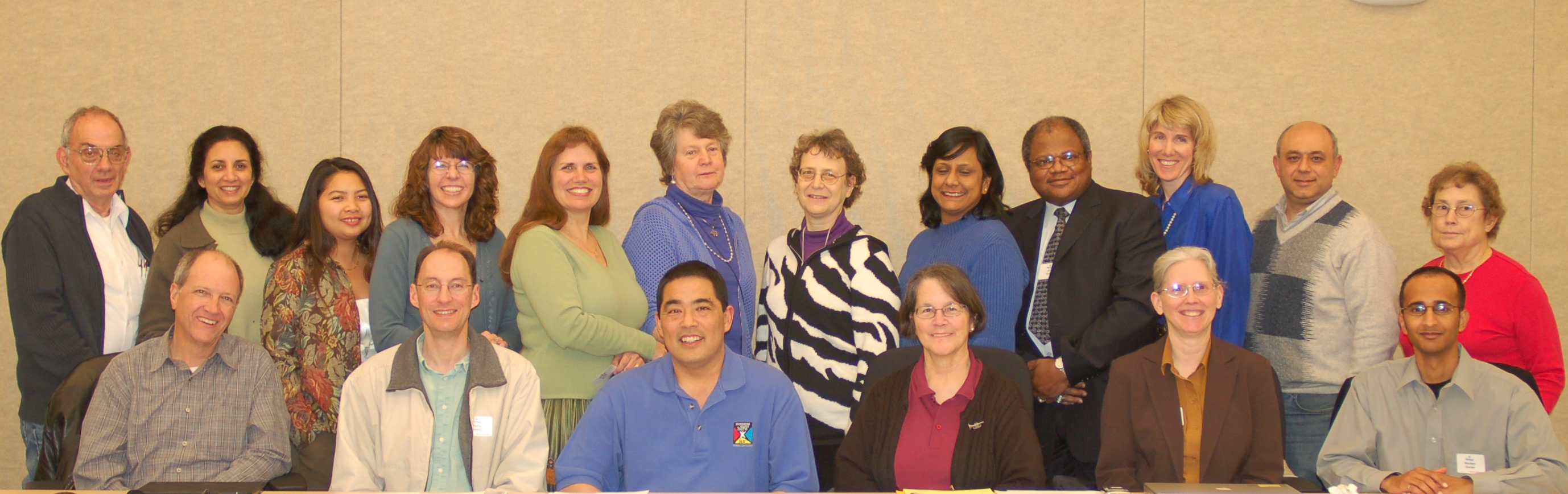
2008 Board
 
1st Row (left to right):  Jerry Kissinger, Kerry Veenstra, Bruce Kawanami, Susan Lange, Larke Reeber, and Rochan Sankar.  2nd Row: Lynn Liebschutz, Prema Rao, Vanessa Burbach, Susan Oldham-Fritts, Heidi Black, Ann Burrell, Sandy Yellenberg, Veena Jain, John Turner, Sandra Meditch, Moenes Iskarous, and Pat Castro.


Category awards (ribbons, monetary awards, or sponsored trips) valued at approximately $60K are awarded to Synopsys Championship winners as described below.  See Award History for previous winners.

  • SCVSEFA awards First, Second, and Honorable Mention ribbons based on scientific merit.  Approximately 40% of Championship projects receive scientific category awards. Grand prize winners, Isabelle Stone and Castro Family Award winners, and GP alternates automatically receive a 1st Place Category Award.
  • Ten to twelve outstanding projects in the high school division (grades 9–12) win Grand Prize Awards and an all-expense-paid trip to the Regeneron International Science and Engineering Fair (ISEF).
  • About 100 top projects in the middle school and high school divisions are selected to compete in the California Science & Engineering Fair (CSEF). Please be aware that all attendees must arrange for their own chaperone.
    • SCVSEFA sponsors twelve projects:
      • Six projects in the middle school division (grades 6–8) receive the Isabelle Stone Award (biological sciences) or the Castro Family Award (physical sciences)
      • Six projects in the high school division (grades 9-12) receive Grand Prize Alternate awards
        Due to significantly reduced funding this year, we cannot pay room, board and travel costs to CSEF for sponsored awards; registration fees will be covered. Sponsored students for whom this presents a hardship may request support.

  • Selected winners (approximately 10%) in the middle school division (grades 6-8) are eligible to compete in the Thermo Fisher Scientific Junior Innovators Challenge (formerly Broadcom Masters Competition). For 2026, SCVSEFA nominated 6th, 7th, and 8th grade Category Prize 1st Place winners. This competition culminates with a competition for the 30 finalists in Washington, DC, in October.
  • In addition, there are around 40 companies and organizations that sponsor Sponsored Awards to projects that meet their specific criteria (see below).

Sponsored Awards

Patrons of Sponsored Awards that include Companies and Organizations select projects to receive Sponsored Awards at the Championship. These awards may include cash, tours, and/or tangible items. Judging for Sponsored Awards is based on the criterion set up by the participating company, organization or individual. Therefore, a student should give his/her project a descriptive title so that Sponsored Awards judges can spot that potential project of interest based on the title of project alone. Students need to keep in mind that in general, a well worded title and thoughtfully written abstract invites the attention of judges. 

Competitions Which Require Participation in the Synopsys Championship

Thermo Fisher Scientific Junior Innovators Challenge

SCVSEFA may nominate Junior Division students to compete in the Thermo Fisher Scientific Junior Innovators Challenge through our affiliation with the Society for Science. All projects in the Junior Division which receive a First Place category award are eligible but Thermo Fisher sets a 10% limit. For 2026, SCVSEFA nominated 6th, 7th, and 8th grade Category Prize 1st Place winners.

The Thermo Fisher Scientific Junior Innovators Challenge is a nationwide competition for students in the sixth, seventh, and eighth grades. From the total entrant pool, the Top 300 semifinalists are selected. Thirty (30) finalists win an expense-paid trip to Washington, D.C., where they compete for awards and prizes, including the top education award of $25,000. Complete details and the 2026 application are available at their website.

CSEF — California Science & Engineering Fair

Top ranked middle and high school projects (grades 6–12) will be invited to attend the California Science & Engineering Fair, based on (1) the quality of the project at the Championship (ranking by judges), and (2) the number of spaces allotted to SCVSEFA by CSEF. We have great news. Our allotment numbers have shown a steady increase based on our recent successes. Learn more: csef.usc.edu

Regeneron ISEF — International Science and Engineering Fair

The Regeneron International Science and Engineering Fair (ISEF), the world’s largest international pre-college science competition, provides an annual forum for more than 1800 high school students from over 75 countries, regions, and territories to showcase their independent research as they compete for more than $5 million annually. The Synopsys Championship typically sends 10 projects to this competition. http://www.societyforscience.org/isef/

Competitions Which DO NOT Require Participation in the Synopsys Championship

RISE Program

RISE Program, supported by the Rhodes Trust and Schmidt Futures. The program offers benefits including scholarships, mentorship, access to career development opportunities, funding, and more as Global Winners work toward solving humanity’s most pressing problems. Rise is open to students who are 15 to 17 years old. Students can learn more about the program here.

BioGENEius Challenge

The At-Large BioGENEius Challenge is a virtual competition available to high school students in the United States. Students in grades 9-12 may enter their life science/biotech-related regional fair projects provided they meet the criteria listed on the National competition website (www.biotechinstitute.org). Please note: There was not a 2024 or 2025 Bay Area BioGENEius Challenge.
Applications for 2026 are due: TBD

Spellman High Voltage Clean Tech Competition (sponsored by the Center for Science Teaching & Learning)

The  Clean Tech Competition is a research and design challenge for pre-college youth that builds on sound scientific understanding of real-world issues and the integration of science, English/language arts, mathematics, technology, the arts, and the design process to inspire all students toward achievement and make them aware of the impact of science and technology on the 21st century world. Each year, the competition will address a clean technology issue that is grounded in core technological competency areas and focuses on the next great engineering challenges. The competition is designed to foster a deeper understanding of science and technology, recognize outstanding talent, and prepare the next genertion of globally competitive innovators. For more details visit: https://krk.boo.mybluehost.me/home/

DE-YSC — Discovery Education/3M Young Scientist Challenge:

Middle school students create a 1-2 minute video describing a new innovation or solution that could solve or impact an everyday problem related to how we live, how we work or how we play. Ten finalists are chosen for their passion for science, spirit of innovation and communication skills
Learn more: https://www.youngscientistlab.com/

MIT THINK Competition

THINK stands for Technology for Humanity guided by Innovation, Networking, and Knowledge. The competition challenges high school students to take a refreshing approach to designing a technological solution to a social problem. Learn more. MIT THINK competition

Regeneron Science Talent Search

A Society for Science & the Public  affiliate,  the Regeneron Science Talent Search is the nation’s oldest and most prestigious science and math competition for high school seniors.  Students are selected based upon their scientific research and also on their overall potential as future leaders of the scientific community.  Regeneron STS

Stockholm Junior Water Prize Competition

The Stockholm Junior Water Prize is the world’s most prestigious youth award for a water-related science project. The prize taps into the unlimited potential of today’s high school students as they seek to address current and future water challenges. Any high school student (grade 9-12) with a water-related science project is eligible to participate in the Stockholm Junior Water Prize competition. Teams of up to three students may enter; however, only one state representative is guaranteed a trip to the national competition to present their team project. Stockholm Junior Water Prize

Check Project Status

After submitting and paying for their applications, students are responsible for tracking project status using the “Check Project Status” button above. Projects are listed by teacher and Project Number. If payment was successful, the Project Code will appear in the “Payment Submitted” line at the top of the Synopsys Championship Project Status page. Status updates will follow SRC review, which may take 2–4 weeks. If a project isn’t listed, please contact the fair administrators.

Project Status Definitions

Application Accepted
Everything is complete and approved. You may begin your project.

Application Received / Awaiting Review for Completeness
Your application is submitted and waiting for SRC to review for completeness.

Waiting for SRC/IRB Review
Your application is submitted and waiting for SRC to review for completeness.

Application Incomplete / See Your Teacher
An email has been sent to the student and teacher with details. Common reasons it is incomplete:

  • Quality issues: Procedures do not meet Minimum Quality Requirements. Resubmit your improved procedures as an email reply to the note sent by the Scientific Review Committee.
  • Forms issues: Missing or incorrect forms—correct as specified and monitor your status until listed as “Accepted.”

Project Not Qualified
Project cannot be approved due to major safety hazards, rules violations that can not be corrected, missed SRC pre-approval deadlines, or an ineligible Field of Study.

Project Withdrawn
Withdrawn by the student or teacher.

No Show
A project that was accepted but not presented at the Synopsys Championship.

  1. Inexpensive display boards and other display aids are available at most office and art supply stores.
  2. Use type families and colored backgrounds to associate groups of information throughout your display. Remember that black or dark type is easiest to read and that judges do notice spelling and grammar.
  3. Your title should be big, easy to read, and capture the spirit of your research. You can use two titles if you wish, a scientific one on top and one for the lay audience below it.
  4. Possible sections for your board might include: Introduction, Background/Research, Hypothesis, Experimental Design, Data, Data Interpretation, Conclusion/Discussion, Further Research.
  5. “A picture is worth a thousand words.” Photographs and drawings are good display tools: they help your audience understand your research and are eye-catching aids for your display. Remember you need written consent (Form 4) if you use a photograph of anyone other than yourself.
  6. Proper attribution is required for all photos, graphics, graphs, diagrams, images, and other visuals. Citations must be clear and professional. Please refer to How to Cite Photos, Graphics, Graphs & Online Images on Your Project Display Board for guidance.
  7. Use the largest possible visuals and type. Important text should be legible from at least three feet away. Use font sizes of at least 24 points on your display board.
  8. Use brief statements. Aim to have three to five bulleted statements, each 10 to 20 words per section.
  9. Tables of numerical data have a place—but maybe it’s in the notebook rather than on the display board. Use graphs or charts instead of tables wherever possible.
  10. Label the units of measurement used on each chart axis (e.g., “Centimeters of Rain,” “Years,” “Number of Ladybugs”). Use metric (SI) measurements and scientific names if possible.
  11. Caption your graphs and charts and indicate trends, conclusions drawn, etc.
  12. Project Board should not to exceed 15 inches (38 cm) deep, front to back; 48 inches (122 cm) wide, side to side; and 5 ft (150 cm) high above the table top. Display materials must fit on the table in front of your board. This space is approx. 15″ x 24″. Display boards of 3-4 ft height (vs 5 ft) are recommended for readability by the judges.